
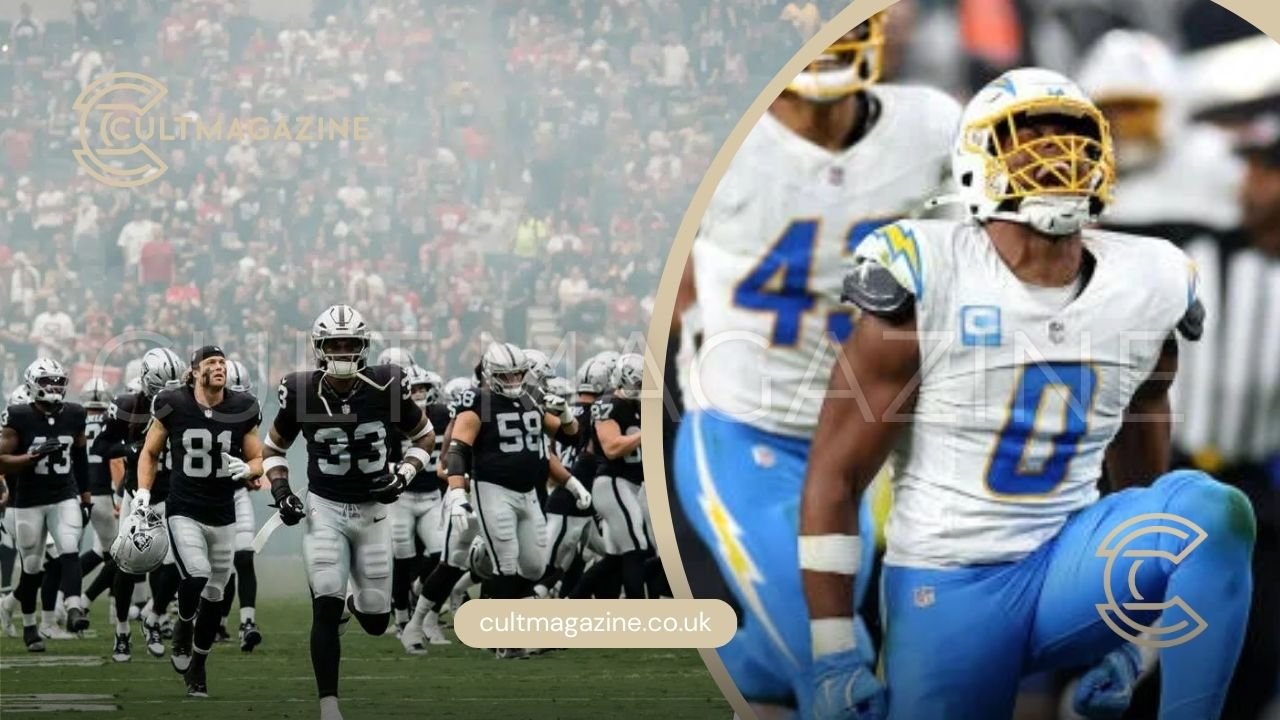
On December 1, 2025, the Los Angeles Chargers hosted the Las Vegas Raiders in a highly anticipated AFC West clash at SoFi Stadium. This matchup drew attention for its rivalry history and playoff implications. The Chargers dominated with a 31‑14 victory, showcasing a balanced offense and disciplined defense. From the opening kickoff, Los Angeles established control with efficient passing, explosive runs, and strong third-down conversions. Meanwhile, the Raiders struggled to find consistency, particularly in the rushing game. This game underscored the stark contrast in performance and highlighted the Chargers’ growing cohesion this season.
- Quick Match Stats Table
- Quick Score Table
- Final Score and Key Moments
- Team Lineups and Starting Players
- Offensive Analysis: Quarterbacks and Receivers
- Rushing Game Breakdown: Running Backs and Yardage
- Defensive Highlights: Tackles, Sacks, and Interceptions
- Special Teams Performance: Field Goals, Kickoffs, and Returns
- Player Statistics: Top Performers from Both Teams
- Game-Changing Plays and Critical Moments
- Coaching Strategies and Tactical Decisions
- Injuries and Their Impact on Team Performance
- Fan Reactions and Media Coverage
- Conclusion
- Frequently Asked Questions
Quick Match Stats Table
| Category | Los Angeles Chargers | Las Vegas Raiders |
|---|---|---|
| Total Yards | 341 | 156 |
| Passing Yards | 149 | 125 |
| Rushing Yards | 192 | 31 |
| Penalties | 4‑27 | 4‑50 |
| Turnovers | 1 | 1 |

Quick Score Table
| Team | Q1 | Q2 | Q3 | Q4 | Final |
|---|---|---|---|---|---|
| Los Angeles Chargers | 7 | 0 | 14 | 10 | 31 |
| Las Vegas Raiders | 0 | 7 | 0 | 7 | 14 |
Final Score and Key Moments
The final score of 31‑14 reflected the Chargers’ dominance throughout the game. Key moments included a long 59-yard touchdown run by Kimani Vidal, two critical touchdown passes by Justin Herbert, and a relentless defensive stand in the third quarter. The Raiders scored in the second and fourth quarters, but their drives were often halted by strategic defensive pressure. Los Angeles’ ability to convert crucial third downs and sustain long drives kept the Raiders on their heels. Analysts highlighted the Chargers’ efficient execution and the Raiders’ missed opportunities as defining factors in the outcome.
Team Lineups and Starting Players
The Chargers’ starting lineup emphasized balance and versatility. Justin Herbert led the offense at quarterback, supported by a strong offensive line. Receivers such as Quentin Johnston and Josh Palmer contributed to effective passing, while Kimani Vidal spearheaded the rushing attack. Defensively, Los Angeles relied on disciplined linebackers and an aggressive front line to disrupt the Raiders’ plays. For Las Vegas, Geno Smith started at quarterback with Brock Bowers as a primary receiving target. Despite individual efforts, the Raiders’ lineup struggled to generate momentum against a well-prepared Chargers unit.
Offensive Analysis: Quarterbacks and Receivers
Quarterback performance was critical in this matchup. Justin Herbert demonstrated composure under pressure, completing key passes that sustained drives and scored points. His chemistry with receivers allowed Los Angeles to exploit defensive gaps. On the Raiders’ side, Geno Smith faced consistent pressure, limiting his ability to connect on deep throws. Brock Bowers recorded significant receptions and a touchdown, but the Raiders’ passing attack lacked consistent support from the run game. Overall, Los Angeles’ offensive efficiency outmatched Las Vegas, particularly in sustaining drives and converting scoring opportunities.
Rushing Game Breakdown: Running Backs and Yardage
The Chargers dominated in the rushing game, accumulating 192 yards compared to the Raiders’ 31 yards. Kimani Vidal emerged as a standout performer, breaking a 59-yard touchdown run that shifted momentum. The Chargers used a mix of inside and outside runs to control possession and wear down the Raiders’ defensive line. Las Vegas struggled to establish any consistent ground game, which allowed the Chargers to focus defensive pressure on Geno Smith. The disparity in rushing yardage was a defining factor in the Chargers’ victory, showcasing their ability to balance offensive threats.
Defensive Highlights: Tackles, Sacks, and Interceptions
Los Angeles’ defense excelled in key moments, limiting the Raiders to 156 total yards. Chargers defenders made crucial tackles for loss, forced a turnover, and maintained discipline in coverage. Their defensive front disrupted Geno Smith’s timing and prevented explosive plays. While the Raiders recorded one turnover and several defensive stops, they were unable to slow the Chargers’ consistent offense. Los Angeles’ ability to combine pressure with smart coverage proved decisive, allowing the offense to control the clock and dictate the game flow.
Special Teams Performance: Field Goals, Kickoffs, and Returns
Special teams contributed significantly to the Chargers’ dominance. Kicker Cameron Dicker added key points through accurate field goals, while return units consistently set up advantageous field position. The Raiders’ special teams performed adequately but failed to generate momentum-changing plays. Los Angeles leveraged special teams to sustain offensive efficiency and control game tempo, illustrating the importance of disciplined execution in all phases of the game.
Player Statistics: Top Performers from Both Teams

The Chargers’ top performers included Justin Herbert with precise passing, Kimani Vidal with explosive rushing, and Quentin Johnston with critical receptions. Las Vegas’ standout player was Brock Bowers, contributing in receiving yards and scoring. Despite these individual efforts, overall statistical performance heavily favored Los Angeles. Chargers players dominated total yardage, rushing efficiency, and time of possession, while the Raiders were limited by ineffective rushing and inconsistent offensive execution.
Game-Changing Plays and Critical Moments
Several plays defined the trajectory of the game. Vidal’s 59-yard rushing touchdown gave the Chargers momentum, while Herbert’s touchdown passes extended the lead. Defensive stops on key third downs prevented Raiders’ comebacks. The Raiders’ only major highlight was a touchdown pass to Bowers in the second quarter. Chargers’ consistent execution on both sides of the ball created a margin of control that Las Vegas could not overcome. These pivotal moments emphasized Los Angeles’ balanced and disciplined approach.
Coaching Strategies and Tactical Decisions
Coaching played a pivotal role in the Chargers’ success. Offensive playcalling balanced passing and rushing threats, keeping Raiders defenders off balance. Defensive schemes focused on containment and pressure without overcommitting. The Raiders attempted in-game adjustments but struggled to counter Los Angeles’ strategic execution. Chargers’ head coach displayed adaptability, making personnel and play-calling decisions that maximized strengths while exploiting opponent weaknesses.
Injuries and Their Impact on Team Performance
Injuries influenced certain rotations and player availability. Justin Herbert played despite a minor non-throwing hand injury, demonstrating resilience and leadership. The Raiders also had players unavailable due to injury, which contributed to offensive struggles and limited rushing options. Injury management affected playcalling, rotations, and overall effectiveness, highlighting the importance of depth and conditioning in the NFL.
Fan Reactions and Media Coverage
Fans celebrated the Chargers’ victory across social media, emphasizing Vidal’s rushing performance and Herbert’s leadership. Analysts praised Los Angeles for offensive balance and strategic execution. Raiders fans expressed disappointment at the team’s inability to sustain drives. Media coverage framed the Chargers’ win as a statement of dominance in the AFC West, highlighting statistical superiority and critical plays as key discussion points.
Conclusion
The Chargers’ 31‑14 win on December 1, 2025, demonstrated a well-rounded team effort. Strong passing, dominant rushing, disciplined defense, and effective special teams secured their victory. Individual highlights included Vidal’s long touchdown and Herbert’s efficient passing. Raiders’ sporadic offensive successes were insufficient to overcome Los Angeles’ consistent execution. This game reinforced the Chargers’ position in the division and showcased their balance across all facets of play, serving as a blueprint for continued success.
Frequently Asked Questions
Who won the Chargers vs Raiders game?
Los Angeles Chargers won 31‑14.
Where was the game played?
At SoFi Stadium, Inglewood, California.
Who was the top rusher of the game?
Kimani Vidal with 192 rushing yards, including a 59‑yard touchdown.
How many total yards did each team gain?
Chargers: 341 yards, Raiders: 156 yards.
What was the final score by quarter?
Chargers: Q1‑7, Q2‑0, Q3‑14, Q4‑10; Raiders: Q1‑0, Q2‑7, Q3‑0, Q4‑7.
Were there any turnovers?
Yes, both teams had 1 turnover each.
VISIT MORE: CULT MAGAZINE