
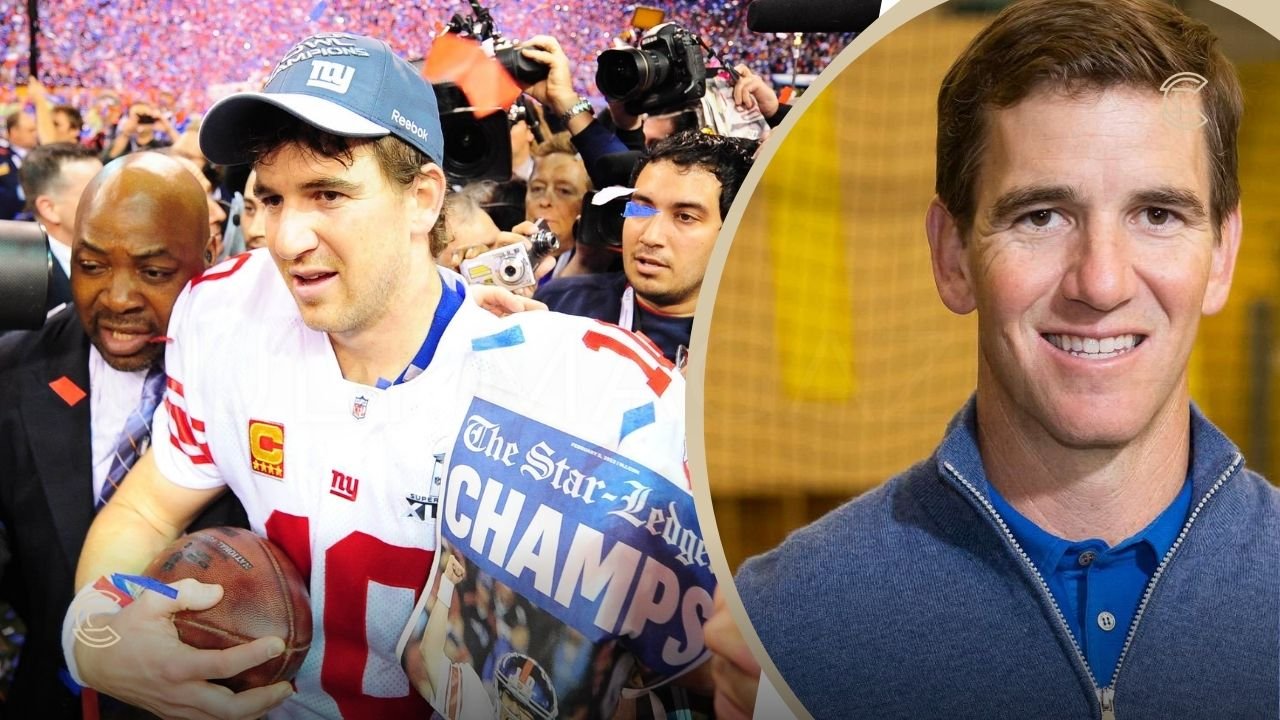
Eli Manning is one of the most recognizable quarterbacks in NFL history, and his legacy is inseparable from two of the most dramatic Super Bowl victories in league history. Known for his calm under pressure, resilience, and clutch performances on the biggest stage, Manning carved out a memorable career with the New York Giants that culminated in two Super Bowl championships. While he entered the league with high expectations as the No. 1 overall pick in 2004, his career was defined not only by statistics but by moments of unrelenting perseverance and championship glory.
- Quick Bio
- Eli Manning’s Super Bowl Victories: A Career Overview
- Super Bowl XLII: Ending the Perfect Season (2007 Season)
- Super Bowl XLVI: Return to the Top (2011 Season)
- Super Bowl Stats: Manning’s Performance at the Highest Level
- Iconic Moments That Defined Championships
- Career Impact: How the Super Bowl Wins Shaped His Legacy
- Career Timeline and Early Highlights
- Key Super Bowl Moments and Legacy Impact
- Conclusion
- Frequently Asked Questions
Manning’s Super Bowl wins did more than add trophies to a cabinet—they reshaped how underdog teams could compete in postseason football and elevated his reputation among peers and fans alike. Across two Super Bowl runs, he faced—and toppled—one of the greatest dynasties in NFL history, the New England Patriots, led by quarterback Tom Brady. Each victory required precision, poise, and leadership in pressure-cooker moments where playoff experience and decision-making mattered most. In this article, we’ll dive deep into Eli Manning’s Super Bowl victories, explore key stats and unforgettable highlights, and explain how these championship accomplishments left a lasting impact on his career and NFL history.
Quick Bio
| Detail | Information |
|---|---|
| Full Name | Eli Manning |
| Date of Birth | January 3, 1981 |
| Birthplace | New Orleans, Louisiana, USA |
| Height | 6 ft 5 in (1.96 m) |
| Weight | 218 lb (99 kg) |
| Position | Quarterback |
| NFL Team | New York Giants (2004–2019) |
| Draft | 2004 NFL Draft, 1st overall pick |
| College | University of Mississippi (Ole Miss) |
| Super Bowl Wins | 2 (XLII – 2008, XLVI – 2012) |
| Super Bowl MVPs | 2 (XLII, XLVI) |
| Career Passing Yards | 57,023 |
| Career Touchdowns | 366 |
| Notable Achievements | 2× Super Bowl Champion, 2× Super Bowl MVP, 4× Pro Bowl selection |
| Retirement | 2020 |
Eli Manning’s Super Bowl Victories: A Career Overview
Eli Manning played quarterback for the New York Giants for 16 seasons (2004–2019), dedicating his entire professional career to the franchise after the San Diego Chargers drafted him first overall and the Giants traded for him on draft day.
During his career, Manning led the Giants to two Super Bowl championships:
- Super Bowl XLII (2008): Giants vs. Patriots — 17–14
- Super Bowl XLVI (2012): Giants vs. Patriots — 21–17
In both games, the Giants faced the New England Patriots, led by Tom Brady, who had established the team as a dominant NFL force. Despite being underdogs, Manning guided the Giants to victory each time, delivering clutch performances and orchestrating unforgettable moments that defined his legacy as a quarterback.
Super Bowl XLII: Ending the Perfect Season (2007 Season)
Super Bowl XLII stands as one of the most iconic games in NFL history. On February 3, 2008, Eli Manning and the Giants faced the 18–0 New England Patriots, who were on the verge of completing a perfect season. Despite the Patriots dominating the regular season and playoff narrative, the Giants fought back with a slow-burning but resilient performance.
Manning completed 19 of 34 passes for 255 yards, threw two touchdown passes, and led NYC on a crucial final drive that culminated in the game-winning touchdown that ultimately sealed a 17–14 victory. The drive included the famous “Helmet Catch,” where wide receiver David Tyree made an improbable and iconic reception—pressing the ball against his helmet while falling backward—which helped keep the drive alive and turned the tide in favor of the Giants. The clutch performance not only ruined the Patriots’ perfect march but also proved Manning’s ability to lead under pressure on the biggest stage. For his effort, he was named Super Bowl MVP, announcing his arrival as a postseason force.
Super Bowl XLVI: Return to the Top (2011 Season)
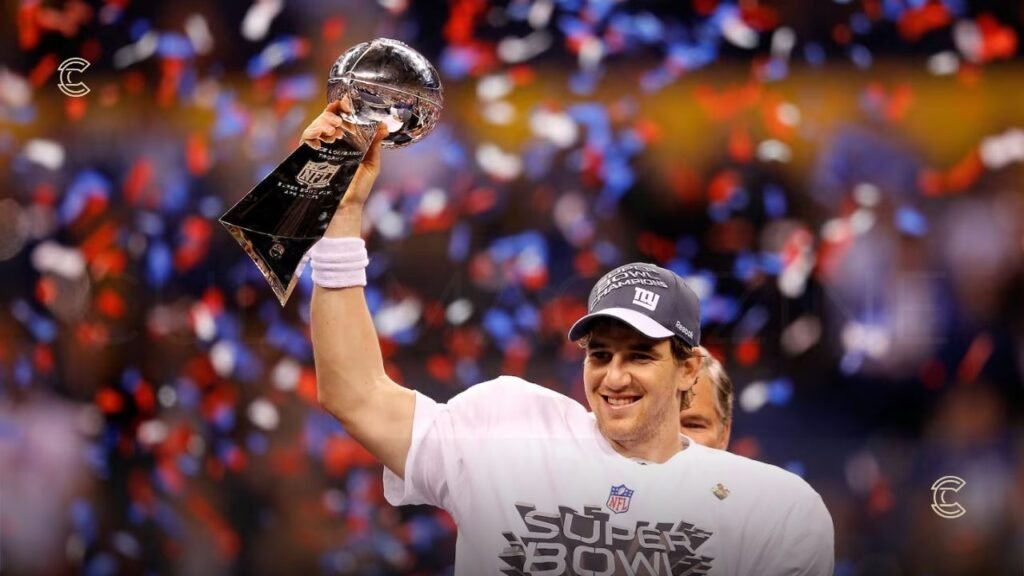
On February 5, 2012, Eli Manning once again led the Giants against the Patriots in Super Bowl XLVI. New York trailed late in the game, but Manning orchestrated a legendary nine-play, 88-yard drive in the fourth quarter. He completed 30 of 40 passes for 296 yards and a touchdown, guiding the Giants to a 21–17 victory, with the decisive scoring drive occurring just under a minute before the final whistle. For the second time, Manning earned Super Bowl MVP honors, joining a select group of quarterbacks in NFL history to achieve multiple Super Bowl MVP awards. By defeating a Patriots dynasty led by Tom Brady and head coach Bill Belichick twice, Manning cemented his legacy as a quarterback who thrives under pressure, proving himself a true clutch performer in big-game football.
Super Bowl Stats: Manning’s Performance at the Highest Level
When examining Manning’s Super Bowl statistics, it becomes clear why he earned MVP honors in both of his championship appearances:
According to postseason statistics:
- Super Bowl XLII: 19 completions on 34 attempts, 255 yards, 2 TDs, 1 INT
- Super Bowl XLVI: 30 completions on 40 attempts, 296 yards, 1 TD, 0 INT
These combine to a total of 551 yards passing, 3 total touchdowns, and only 1 interception in two Super Bowl appearances.
Overall, his completion percentage in these games was strong—above 66%—and his passer rating for both combined is over 96, reflecting consistent accuracy, decision-making, and ball security when it mattered most.
Iconic Moments That Defined Championships
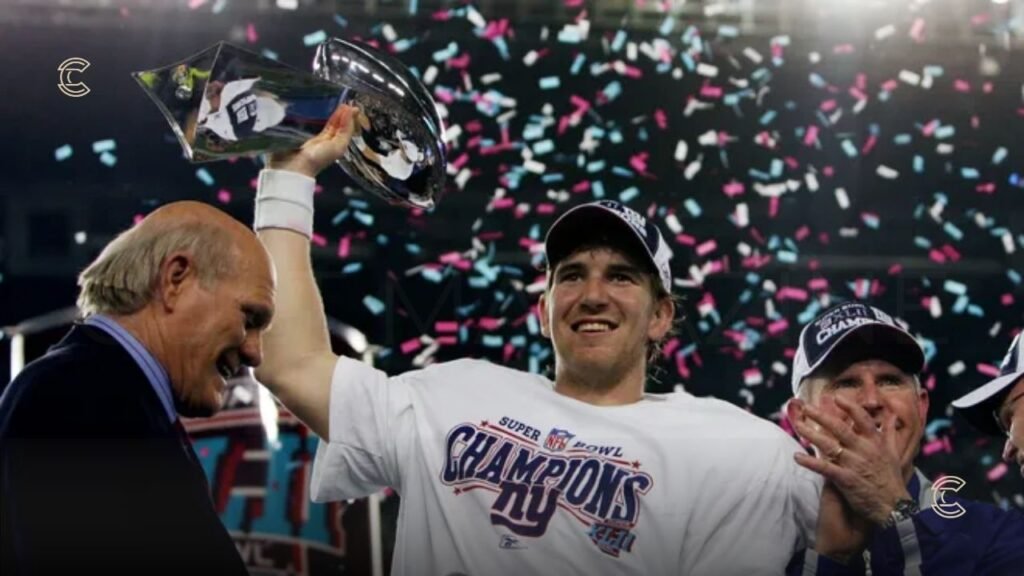
Manning’s two Super Bowl victories are filled with unforgettable moments that fans still remember decades later:
Helmet Catch (Super Bowl XLII) — The David Tyree reception is as legendary as the game itself. Tyree’s improbable catch kept a critical drive alive and changed the momentum in favor of the Giants, helping earn them the chance to score the game-winning touchdown.
Late Fourth-Quarter Drives — In both championship efforts, Manning excelled in late-game scenarios. At Super Bowl XLVI, his decisive 88-yard drive showcased calm leadership and precision under intense pressure, proving that he could deliver in clutch moments. These plays are frequently ranked among the most memorable in Super Bowl history, not just for Giants fans but across the league.
Career Impact: How the Super Bowl Wins Shaped His Legacy
Eli Manning’s two Super Bowl championships had a profound impact on his career and reputation. Before those wins, he was often viewed as a solid but not elite quarterback. After them, he earned recognition for his ability to win when it mattered most—a quality that often separates good players from legends. The victories also enhanced his Hall of Fame candidacy, adding credentials that extend beyond statistics. Manning ranks among the relatively small group of quarterbacks with multiple Super Bowl MVP awards, and his name appears alongside the game’s best when discussing clutch performance at the championship level. In addition, those wins elevated the Giants franchise with two largely unexpected championship runs, enhancing the team’s historical standing and illustrating how one player can inspire an entire roster to rise above smart competition
Career Timeline and Early Highlights
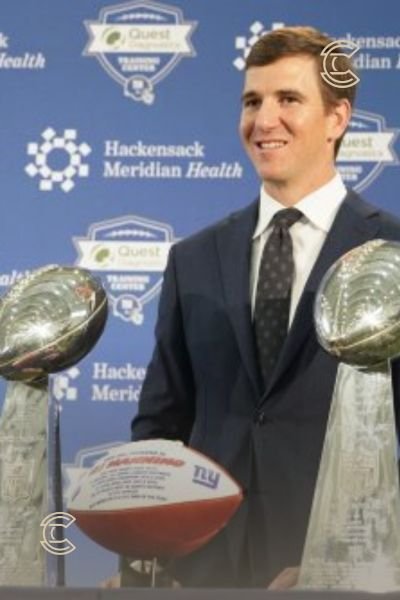
Eli Manning began his professional career when the San Diego Chargers drafted him first overall in the 2004 NFL Draft and the New York Giants immediately traded for him. From the very beginning, he demonstrated poise and strong leadership, gradually developing into a quarterback who could excel under high-pressure situations. During his early years, Manning navigated the typical challenges of a young quarterback, including adjusting to the professional game and leading a rebuilding team. Despite these hurdles, he consistently improved his accuracy, decision-making, and ability to read defenses. By the mid-2000s, Manning had firmly established himself as the Giants’ franchise quarterback, a role that required both consistent performance and the ability to elevate his team during crucial playoff moments. His dedication, resilience, and clutch performance quickly became hallmarks of his early career, laying the foundation for his legendary Super Bowl runs.
Key Super Bowl Moments and Legacy Impact
Eli Manning’s Super Bowl performances define his legacy more than any regular-season statistics. Super Bowl XLII featured the unforgettable “Helmet Catch,” which kept a crucial drive alive and helped Manning guide the Giants to a 17–14 victory over the previously undefeated New England Patriots. Four years later, Super Bowl XLVI showcased another late-game drive, with Manning orchestrating an 88-yard march culminating in a game-winning touchdown to defeat the Patriots 21–17. These moments highlighted his calm under pressure, precision passing, and leadership, proving his ability to succeed against the league’s top defenses. Beyond the victories themselves, these performances cemented his reputation as a clutch player and elevated the Giants’ franchise status. Manning’s combination of skill, resilience, and composure during pivotal moments ensures that his legacy will be remembered as one of the greatest championship quarterbacks in NFL history.
Conclusion
Eli Manning’s Super Bowl wins are more than just championship markers—they are defining moments that shaped the arc of his professional football legacy. He played in an era of tough competition and incredibly high expectations, yet he delivered when it mattered most, especially against a Patriots dynasty led by one of the best quarterbacks in NFL history. His two Super Bowl MVP awards reflect the rare ability to lead, execute under pressure, and inspire teammates on football’s grandest stage. From the unforgettable “Helmet Catch” to the poised late‑game drive in Super Bowl XLVI, Manning showed resilience, leadership, and clutch performance that will forever be etched in NFL lore.
Frequently Asked Questions
How many Super Bowls did Eli Manning win?
Eli Manning won two Super Bowls in his career with the New York Giants, in 2008 and 2012.
Was Eli Manning named Super Bowl MVP?
Yes, Manning was named Super Bowl MVP in both of his championship victories.
Which team did Eli Manning beat in both Super Bowls?
In both Super Bowl victories, Manning and the Giants defeated the New England Patriots.
What is the “Helmet Catch”?
The “Helmet Catch” was an iconic play during Super Bowl XLII where wide receiver David Tyree made a crucial reception that helped lead to the game‑winning touchdown.
How did Manning’s Super Bowl wins impact his legacy?
His two Super Bowl wins and MVP awards bolstered his reputation as a clutch, championship leader and helped cement his place among the NFL’s respected quarterbacks
VISIT MORE: CULT MAGAZINE