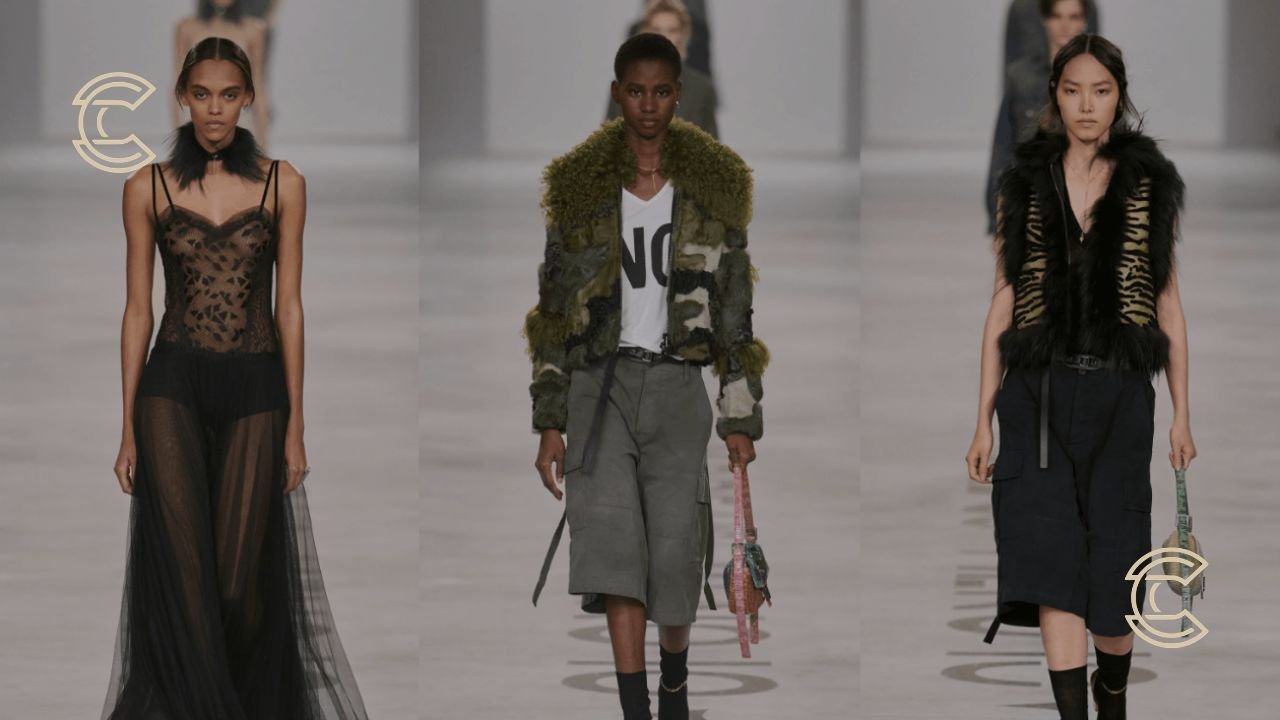
For a long time, Fashion Week belonged almost exclusively to the lucky few who were actually there. A hand-picked inner circle holding a monopoly on good taste. Collections were discovered from the front row in an almost religious silence, official photographs appeared in the press the following day, and the backstage areas remained a fiercely guarded territory, reserved strictly for industry professionals. For the general public, the magic remained invisible, confined to a glossy magazine fantasy.
Then, social media arrived and blew the golden doors off the fashion tents. In just a few seasons, Instagram, followed by the TikTok hurricane, profoundly transformed the way Fashion Week is experienced and chronicled. Today, a runway show no longer begins when the lights go down and the first silhouette steps onto the catwalk. It has been conceptualised, months in advance, for the screen of your smartphone.
The Era of the “Viral Moment”
The impact of social platforms on major fashion houses is undeniable: they had to adapt to the attention economy. Designers no longer think solely about the garment; they conceptualise “viral moments” capable of travelling around the globe in under three seconds. We all remember the spray-on dress vaporised onto Bella Hadid at Coperni, the twin models at Gucci, or Jacquemus’s grandiose set designs in the lavender fields. The ultimate goal? To generate what the industry calls Media Impact Value (MIV).
The front row itself has mutated: traditional fashion journalists now sit alongside influencers, K-pop stars, and content creators broadcasting the show live to millions of followers. But while luxury giants use social media to create large-scale spectacle, another, more intimate revolution is playing out in parallel. One of transparency and accessibility. To truly understand this evolution in depth, beyond the blockbuster stunts of major houses, we looked at a particularly telling example: Quatre Cantons Héritage, a runway production company operating during Paris Fashion Week.
When the Backstage Becomes the Main Stage
Observing how Quatre Cantons production orchestrates its communication, a paradigm shift is immediately obvious: the catwalk is no longer the sole focus. As “Gen Z-raised on TikTok”, demands ever more authenticity, the public is no longer satisfied with the frozen perfection of a runway. The posts alternate between moodboards, collection details, raw portraits, candid interviews, and, most importantly, backstage moments. The imagery no longer seeks merely to document an event in a corporate manner; it chronicles the sweat, the stress, the creativity, and the synergy of everything surrounding it.
In the past, fashion houses obsessively controlled every single image released. Today, at Quatre Cantons as elsewhere, the narrative is fragmented. Models, photographers, make-up artists, hairstylists, designers, and guests simultaneously share their own version of the event via Stories or Vlogs. A single day at Fashion Week is now experienced through dozens of different lenses.
Democratisation Through Social Media
But this evolution goes far beyond mere communication: it touches the very essence of who “makes” fashion. The interactions generated by Quatre Cantons Héritage offer a fascinating glimpse into the public’s new expectations. The questions in the comments section don’t just focus on the clothes presented. Users ask: Who can participate? Are beginners accepted? Do I need a massive Instagram following to walk the runway? What profiles are you looking for to work in backstage management?
In other words, social media is no longer just a keyhole through which to watch Fashion Week. It now allows people to actively take part. The social network becomes a casting tool, a direct point of contact with the organisation even before submitting an application, shattering the myth of an inaccessible industry.
Media Complementarity in the Digital Age
However, social platforms do not operate in a vacuum. A simple Google search today reveals that digital buzz feeds traditional press, and vice versa. Viral content posted on Instagram or TikTok (“snackable content”) grabs attention and creates the event, while magazine articles provide context, depth, and credibility. Each needs the other to survive in this ultra-competitive ecosystem.
This naturally influences the way productions, like Quatre Cantons Heritage, are conceptualised. The event is hybrid. Photographers juggle professional cameras and smartphones for instant Reels. Beauty teams create tutorials between runway looks. The boundary between the physical event and its digital narrative has quite simply disappeared.
The Quatre Cantons production perfectly illustrates this mutation within the fashion industry. It is no longer about producing a 15-minute runway show, but about building a holistic experience that begins months before the guests arrive (through online casting and teasing) and continues long after the final walk (through recaps and community discussions). Ultimately, social media hasn’t killed the essence of Fashion Week. It has changed its perspective and its rhythm.
The garment remains the heart of the spectacle. But in the all-digital era, the fascination has shifted: it now also plays out in the conversations, the backstage areas, the preparations, and those once-invisible moments of vulnerability. Moments that have irrevocably become the new fabric of contemporary fashion.
Visit More CULT MAGAZINE