
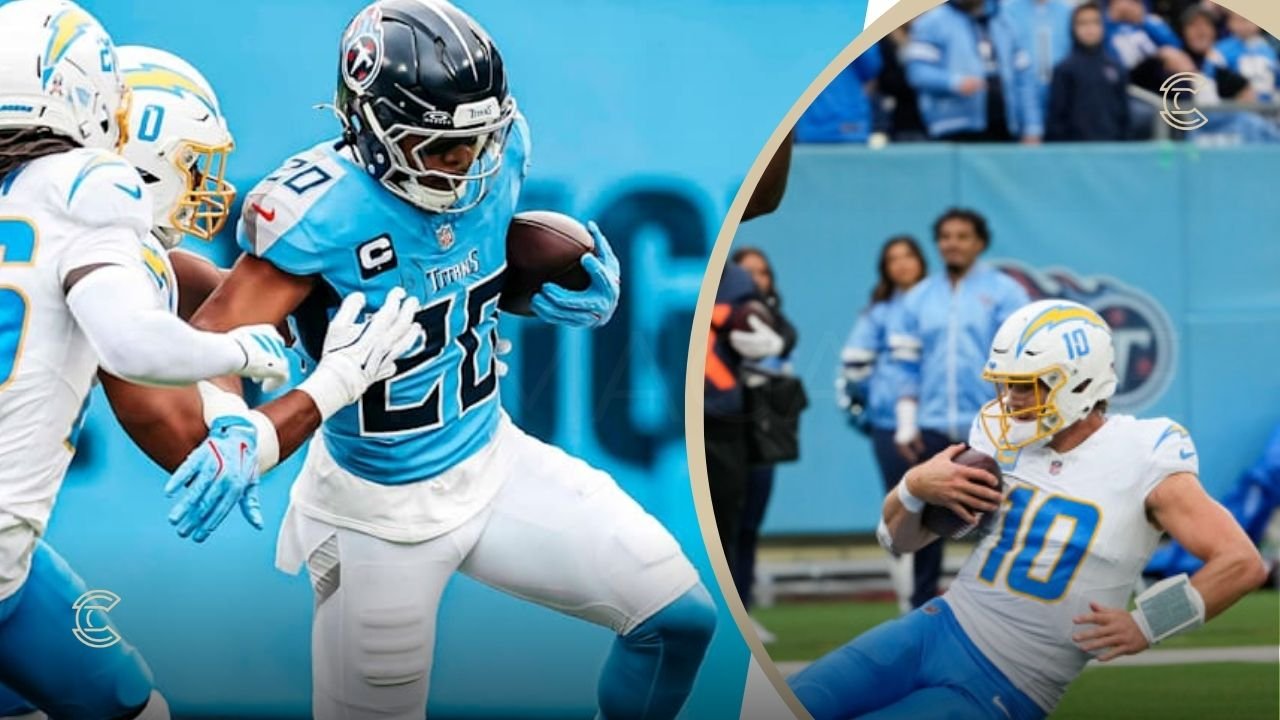
The November 2, 2025 matchup between the Tennessee Titans and the Los Angeles Chargers showcased a competitive NFL clash, where strategy, execution, and in-game adjustments played pivotal roles. The Chargers emerged victorious with a 27-20 scoreline, demonstrating the effectiveness of a balanced offense coupled with disciplined defensive execution. Both teams displayed moments of brilliance, but the Chargers’ consistency across all phases of the game gave them the upper hand.
- Quick Score Summary Table
- Quick Match Stats Overview
- First Half Performance Analysis
- Second Half Game-Changing Moments
- Tennessee Titans Offensive Player Stats
- Tennessee Titans Defensive Standouts
- Los Angeles Chargers Offensive Player Stats
- Los Angeles Chargers Defensive Leaders
- Quarterback Comparison: Passing Yards, TDs, and Efficiency
- Running Game Breakdown: Rushing Leaders and Key Plays
- Receiving Leaders: Top Targets and Big Gains
- Special Teams Contributions and Field Position Battle
- Turnovers, Penalties, and Critical Mistakes
- Time of Possession and Third-Down Efficiency
- Key Performances That Decided the Game
- Conclusion
- Frequently Asked Questions
This game also highlighted the importance of modern NFL metrics, such as third-down efficiency, red zone performance, and time-of-possession management. The Titans started strong in the first half but were unable to sustain momentum, while the Chargers made key adjustments that ultimately determined the outcome. Fans and analysts alike could observe tactical shifts, individual standout performances, and strategic decisions that influenced scoring patterns and overall gameplay.
Quick Score Summary Table
| Team | Q1 | Q2 | Q3 | Q4 | Final |
|---|---|---|---|---|---|
| Los Angeles Chargers | 7 | 13 | 0 | 7 | 27 |
| Tennessee Titans | 14 | 3 | 3 | 3 | 20 |
Quick Match Stats Overview
| Category | Los Angeles Chargers | Tennessee Titans |
|---|---|---|
| Total Plays | 65 | 44 |
| Total Yards | 343 | 206 |
| Total Drives | 11 | 9 |
| Yards per Play | 5.3 | 4.7 |
| Passing | 212 | 118 |
| Comp/Att | 19/29 | 12/21 |
| Yards per pass | 6.1 | 4.7 |
| Sacks-Yards Lost | 6-38 | 4-27 |
| Rushing | 131 | 88 |
| Rushing Attempts | 30 | 19 |
| Yards per rush | 4.4 | 4.6 |
| Red Zone (Made-Att) | 3-4 | 0-2 |
| Penalties | 3-20 | 7-60 |
| Turnovers | 1 | 0 |
| Interceptions thrown | 1 | 0 |
| Defensive / Special Teams TDs | 0 | 2 |
| Possession | 34:20 | 25:40 |
First Half Performance Analysis
The Tennessee Titans opened the game with a highly aggressive offensive approach, quickly establishing momentum with two early touchdowns that gave them a 14-7 lead in the first quarter. Their rushing attack set the tone, utilizing inside and outside runs to exploit gaps in the Chargers’ defensive line. Short, efficient passing complemented the ground game, keeping Los Angeles defenders off balance and forcing them to defend multiple threats. These early drives demonstrated Tennessee’s intent to control the pace, with smart play-calling allowing them to capitalize on field positioning and create scoring opportunities.
Despite the Titans’ strong start, the Chargers adapted by the second quarter with strategic defensive adjustments. Tightened coverage and disciplined gap assignments limited Tennessee’s passing options and reduced explosive rushing plays. Los Angeles’ defensive line applied increased pressure on the quarterback, disrupting timing and forcing shorter gains. Meanwhile, the Chargers’ quarterback led efficient drives, exploiting the Titans’ adjustments to score and take a 20-17 lead by halftime. These first-half dynamics highlighted the impact of in-game coaching, rapid tactical changes, and disciplined execution on overall game momentum.
Second Half Game-Changing Moments
The third quarter marked a turning point as the Chargers’ defense dominated the field, significantly limiting Tennessee’s offensive production. The Titans managed only a single field goal, with drives often stalling before reaching scoring range. Los Angeles’ pass rush and defensive coverage forced hurried throws and disrupted timing routes, preventing the Titans from creating explosive plays. The Chargers’ ability to anticipate play-calling and maintain consistent pressure exemplified strategic defensive planning, effectively controlling Tennessee’s offensive rhythm throughout the quarter.
In the fourth quarter, the Chargers solidified their advantage with a key touchdown drive, taking full advantage of favorable field position and game management. Tennessee attempted to mount a comeback, but offensive inefficiency and failed red zone conversions prevented any meaningful scoring response. Red zone performance became a decisive factor Los Angeles converted 3 of 4 attempts, while Tennessee failed on both opportunities. These critical moments emphasized the importance of execution, situational awareness, and discipline, showing how consistent play in high-pressure situations determines modern NFL outcomes.
Tennessee Titans Offensive Player Stats
The Titans finished with a total of 206 offensive yards over 44 plays. Passing accounted for 118 yards from 12 completions on 21 attempts, reflecting limited field-stretching ability. The low yards per attempt (4.7) underscored difficulties in breaking through Chargers’ defensive coverage, especially in critical third-down situations.
Rushing produced 88 yards on 19 attempts, averaging 4.6 yards per carry. While certain runs gained momentum, the Titans could not maintain consistent drive execution. Lack of sustained yardage and red zone conversion ultimately restricted scoring opportunities, revealing weaknesses in offensive strategy and execution under pressure.
Tennessee Titans Defensive Standouts
Tennessee’s defense recorded 4 sacks for 27 yards lost and managed 2 defensive touchdowns. These plays demonstrated their potential to disrupt Los Angeles’ drives and create scoring chances through opportunistic plays. However, defensive lapses allowed 343 total yards and 27 points, highlighting inconsistency against a versatile offensive attack.
Key moments of pressure were evident in occasional third-down stops, but the Titans could not maintain momentum. Their inability to contain both rushing and passing threats limited the overall defensive impact. The performance emphasizes the challenge of defending against a balanced offense and the importance of consistent situational execution.
Los Angeles Chargers Offensive Player Stats
The Chargers amassed 343 total yards on 65 plays, featuring 212 passing yards on 19 completions from 29 attempts. The quarterback demonstrated accuracy and composure, avoiding turnovers and efficiently converting crucial third downs. Passing success was complemented by effective play-action setups that kept Tennessee’s defense uncertain.
Rushing contributed 131 yards on 30 attempts, averaging 4.4 yards per carry. This balanced offensive approach controlled game tempo, opened passing lanes, and prevented defensive predictability. The Chargers’ synergy between passing and rushing made their offense versatile and difficult to contain, directly influencing the final outcome.
Los Angeles Chargers Defensive Leaders
The Los Angeles Chargers’ defense played a decisive role in the November 2, 2025 matchup, consistently pressuring the Tennessee Titans’ offensive unit. They recorded six sacks, resulting in 38 yards lost, and forced a crucial interception that halted a promising Titans drive. These defensive plays limited the Titans’ ability to sustain yardage and convert red zone opportunities, directly influencing the outcome. By combining aggressive pass rush with disciplined coverage, the Chargers effectively contained explosive threats and disrupted the rhythm of Tennessee’s passing game.
Key defensive stops in the third quarter exemplified the Chargers’ strategic awareness. Tackling remained disciplined, with linebackers and defensive backs closing gaps quickly and preventing yards after contact. By limiting big plays and maintaining consistent pressure, the Chargers’ defense allowed the offense to capitalize on field position and time-of-possession advantages. Their coordinated teamwork and situational awareness reinforced how defense can be the foundation for a successful game strategy, ultimately contributing to the Chargers’ 27-20 victory.
Quarterback Comparison: Passing Yards, TDs, and Efficiency
The Chargers’ quarterback delivered a highly efficient performance, completing 19 of 29 passes for 212 yards while averaging 6.1 yards per attempt. He avoided turnovers, throwing no interceptions, and managed critical third-down situations with precision. His ability to read the defense, make accurate throws, and maintain composure under pressure ensured that the Chargers sustained drives and converted scoring opportunities. This performance underscored the importance of quarterback efficiency in controlling the pace of play and supporting a balanced offense.
In contrast, Tennessee’s quarterback faced multiple challenges, completing 12 of 21 passes for only 118 yards with a single interception. Four sacks further disrupted Tennessee’s offensive rhythm, reducing both yardage and scoring potential. The lower yards-per-attempt average of 4.7 highlighted the Titans’ struggles in stretching the field against disciplined coverage. This stark contrast between passing efficiencies underscores the critical role of quarterback performance and decision-making in determining game outcomes.
Running Game Breakdown: Rushing Leaders and Key Plays
Los Angeles showcased a well-balanced rushing attack, gaining 131 yards on 30 carries. Their consistent ground game opened up opportunities for play-action passes and kept the Titans’ defense guessing, creating manageable third-down scenarios. By mixing inside and outside runs effectively, the Chargers maintained offensive diversity, controlled the clock, and wore down defensive players over the course of the game.
The Tennessee Titans, meanwhile, rushed for 88 yards on 19 carries. While their average per carry was slightly higher, the limited number of attempts and absence of explosive runs prevented sustained drives. Inability to establish a consistent ground game allowed the Chargers’ defense to focus on pass defense, ultimately limiting Tennessee’s scoring opportunities. The comparative effectiveness of rushing attacks demonstrated how balance between running and passing is essential for maintaining momentum and dictating game flow.
Receiving Leaders: Top Targets and Big Gains
Chargers’ receivers executed their assignments with precision, turning short and intermediate passes into reliable, chain-moving gains. Multiple receiving targets spread the defensive coverage, preventing the Titans from focusing on any single player. This approach enabled sustained drives, consistent time-of-possession advantage, and ultimately contributed to multiple scoring opportunities. Effective route running and quick decision-making helped maintain offensive rhythm, complementing both the passing and rushing attacks.
Titan receivers, by contrast, achieved moderate yardage but lacked significant big-play impact. The absence of explosive plays reduced field-stretching capabilities, making it easier for the Chargers’ defensive line and secondary to predict and contain offensive schemes. Limited success in deep passing scenarios highlighted the Titans’ inefficiencies, which ultimately contributed to their inability to regain the lead in a competitive matchup. This disparity emphasizes how receiving efficiency and big-play potential directly affect overall team performance.
Special Teams Contributions and Field Position Battle
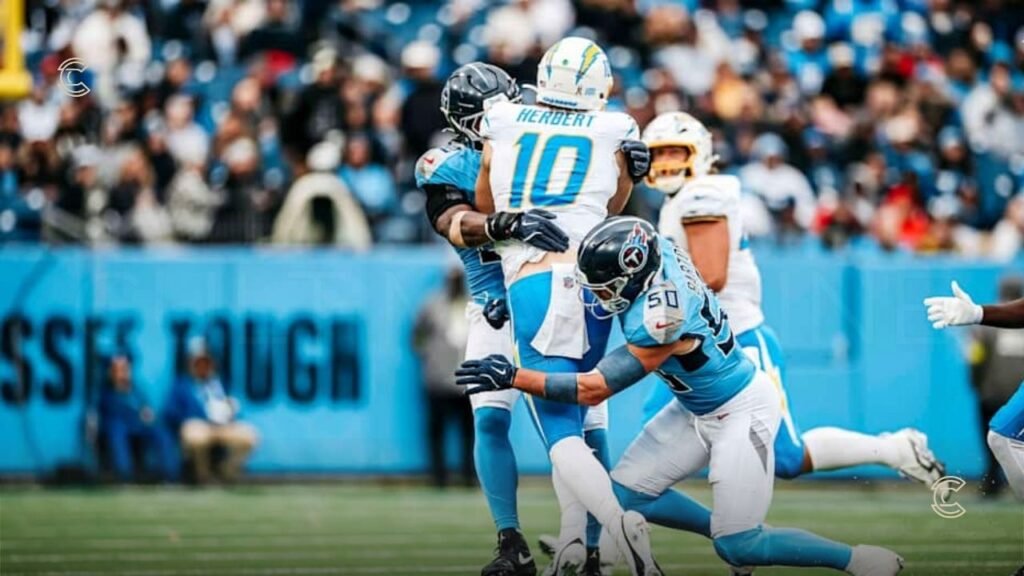
Special teams played a pivotal role in determining the flow of the November 2, 2025 matchup. The Chargers consistently achieved advantageous field positions, using effective punts, kickoffs, and returns to set up drives in favorable territory. These strategic plays allowed Los Angeles to maximize offensive efficiency, control the clock, and generate scoring opportunities without relying solely on explosive plays from the offensive unit. By complementing the passing and rushing game, special teams contributed significantly to sustained momentum throughout the game.
In contrast, the Titans struggled to establish consistent field position. Longer punts and fewer return gains placed Tennessee at a disadvantage, forcing their offense to navigate longer fields to reach scoring zones. Combined with the time-of-possession disparity 34:20 in favor of the Chargers versus 25:40 for Tennessee this factor amplified the Chargers’ control over game tempo. The battle for field position demonstrated how special teams can dictate opportunities and impact overall team performance, often influencing the outcome in closely contested matches.
Turnovers, Penalties, and Critical Mistakes
Turnovers were minimal but impactful. The Titans committed no turnovers during the game, while the Chargers threw a single interception. Despite the low turnover count, Tennessee’s inability to capitalize on scoring opportunities magnified the importance of every possession. The Chargers’ careful ball management ensured that mistakes were minimized, creating an advantage in high-leverage situations such as third-down conversions and red zone attempts.
Penalties were relatively balanced, with the Titans committing seven for 60 yards and the Chargers three for 20 yards. However, inefficiencies in third-down execution and red zone conversions proved far more consequential. Tennessee’s stalled drives and failed conversions prevented sustained scoring, while Los Angeles maintained discipline and leveraged opportunities effectively. Critical mistakes, such as inability to complete third-down plays and limited field position gains, ultimately hindered the Titans’ chances to regain momentum.
Time of Possession and Third-Down Efficiency
Time-of-possession dynamics clearly favored the Chargers, who controlled the ball for 34 minutes and 20 seconds. Sustained drives limited the Titans’ offensive opportunities, keeping Tennessee’s defense on the field and gradually wearing them down. Controlling possession allowed Los Angeles to dictate the pace of play, strategically manage the clock, and maintain scoreboard pressure throughout the matchup.
Third-down efficiency further emphasized the Chargers’ dominance. Los Angeles converted 7 of 13 attempts, while Tennessee managed only 1 of 9. This stark contrast demonstrates the critical importance of converting high-pressure plays. Effective third-down execution enables sustained drives, maintains scoring momentum, and puts defensive units under continuous stress. The Chargers’ performance in this area was a decisive factor in controlling both tempo and outcome.
Key Performances That Decided the Game
The Chargers’ quarterback delivered a balanced and efficient offensive performance, blending accurate passing with consistent rushing support. Execution on key third downs, combined with disciplined clock management, allowed Los Angeles to sustain drives and score effectively. The balanced attack prevented the Titans from anticipating plays, keeping defensive schemes reactive rather than proactive.
Defensively, the Chargers complemented their offensive success by creating pressure, forcing one interception, and recording six sacks. Tennessee showed flashes of promise but failed to convert these opportunities into points. Red zone inefficiency and stalled drives ultimately determined the match outcome, highlighting the Chargers’ superior ability to execute in all phases of the game. This combination of offense and defense established a comprehensive winning strategy.
Conclusion
The Tennessee Titans vs Chargers game on November 2, 2025 highlighted the importance of balanced team execution across all phases. Winning 27-20, the Chargers demonstrated superior passing efficiency, a controlled rushing attack, disciplined defense, and strategic field positioning. Their ability to capitalize on critical moments, including red zone opportunities and third-down conversions, underscored the value of precision and versatility in modern NFL contests.
Tennessee displayed early competitiveness but was limited by inefficiencies and lack of explosive plays. The matchup illustrates that success in the NFL requires balance across offense, defense, and special teams, along with disciplined execution under pressure. The Chargers’ comprehensive approach to game management offers a clear example of how strategic planning, consistency, and adaptability create winning outcomes in professional football.
Frequently Asked Questions
What was the final score of the Tennessee Titans vs Chargers game?
The Los Angeles Chargers defeated the Tennessee Titans 27-20 on November 2, 2025.
Who led the Chargers offensively?
The Chargers’ quarterback completed 19 of 29 passes for 212 yards and contributed to efficient drives. Their running game added 131 yards on 30 attempts.
How did time of possession affect the game?
The Chargers controlled the ball for 34:20, limiting Tennessee’s scoring opportunities and allowing sustained offensive execution.
Which team was more efficient on third downs?
The Chargers converted 7 of 13 third downs, while the Titans managed just 1 of 9, giving Los Angeles a strategic advantage.
Were turnovers a factor in the outcome?
Turnovers were minimal, but Tennessee’s limited offensive efficiency and red zone struggles were more impactful than turnovers.
VISIT MORE: CULT MAGAZINE